

Built for couples and families, not spreadsheets

Shared money is messy.Tracking it shouldn't be.

One calm place to capture spending, share visibility, and answer the awkward “who paid for what?” question before it turns into admin.

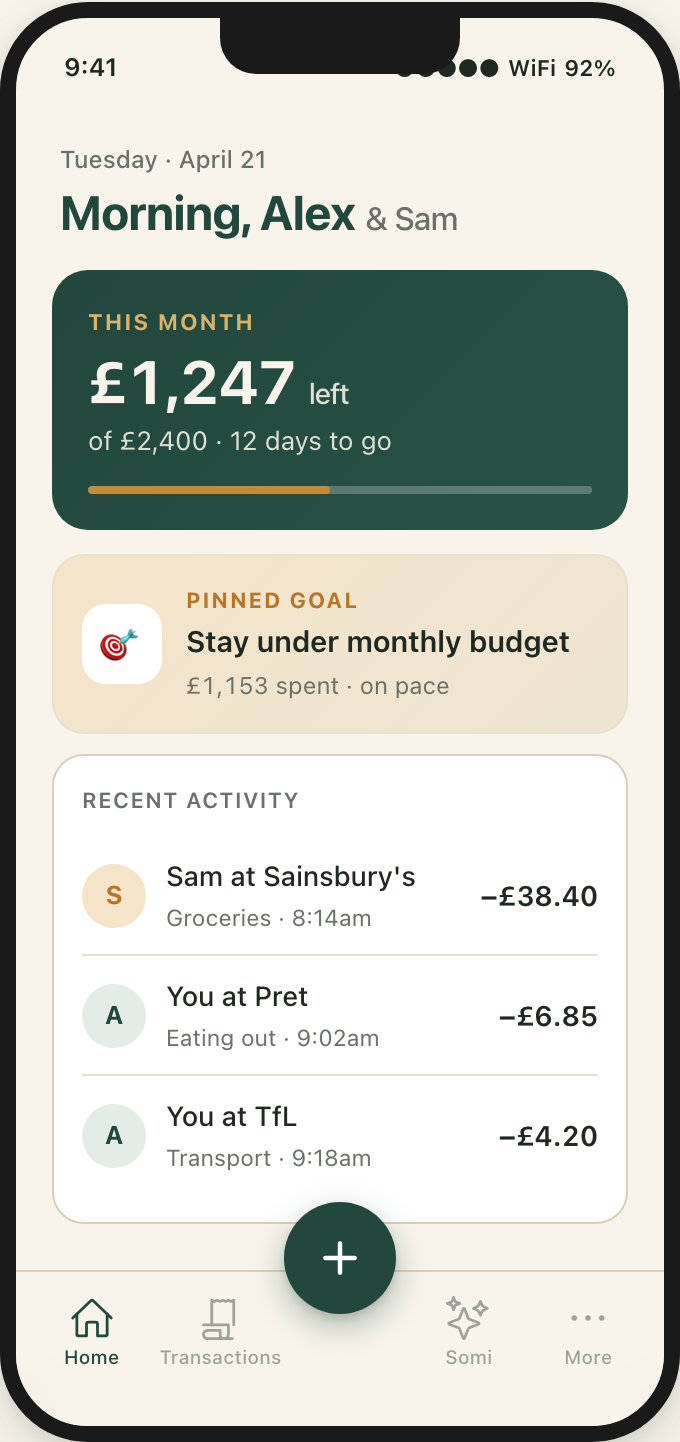
Household view
£2,184

April is slightly higher than March, mostly driven by groceries, pharmacy, and one annual bill renewal.

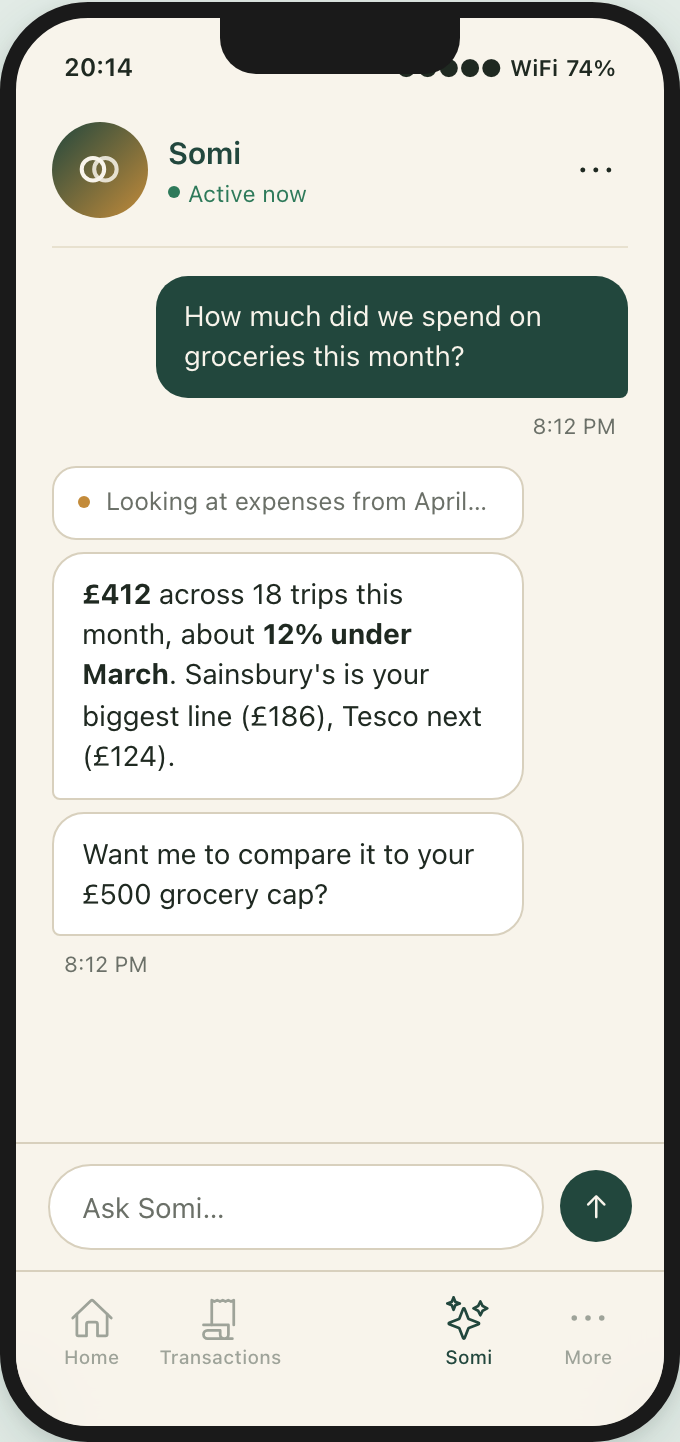
Ask FamSpendy
“How much did we spend on groceries this month?”
Groceries came to £612, up 8% from March. Tesco, Aldi, and one bulk household run drove most of the increase.
Receipts captured fast
No rebuild-the-month-from-memory workflow.
Shared household context
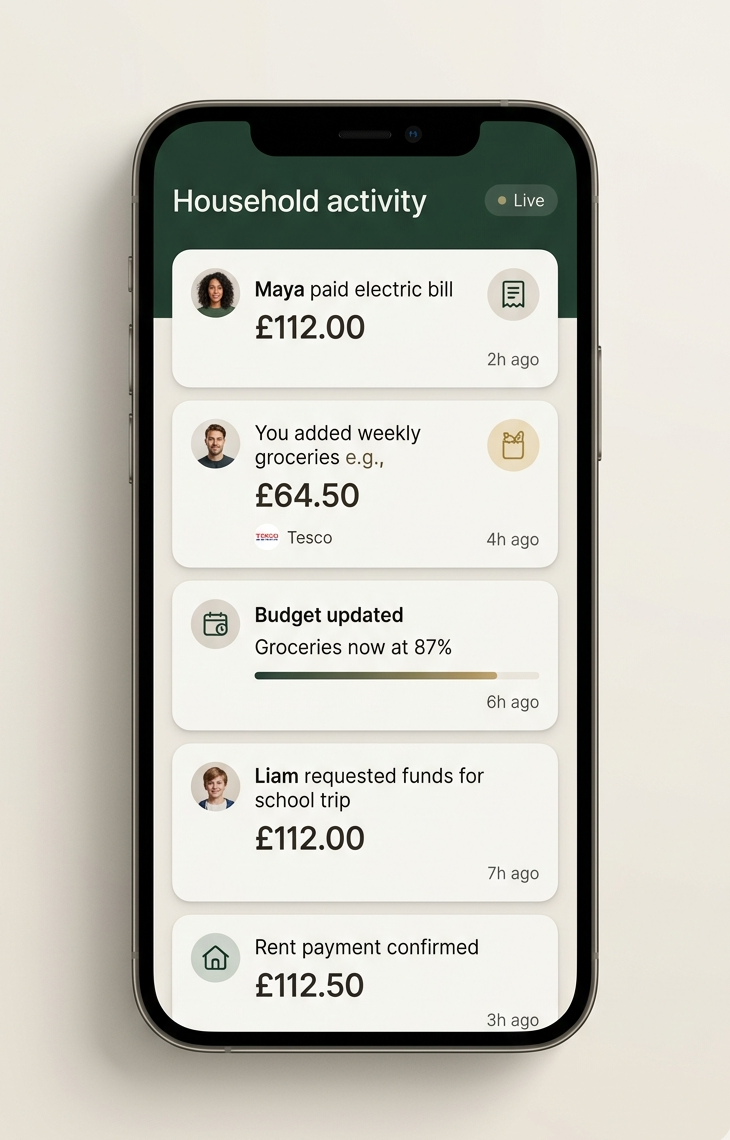
Everyone sees the same picture.
Answers without digging
Use plain English instead of filters and exports.
What makes FamSpendy different

Four reasons this feels different from a typical budgeting app.

The value is not the list of modules by itself. It is the way receipt capture, shared visibility, plain-English answers, and household planning work together.

Designed around real households

This is not trying to make finance feel impressive. It is trying to make shared money easier to run.

Each section below makes one clear claim and pairs it with a believable product moment.

Receipt-first capture

Capture spending when it happens.

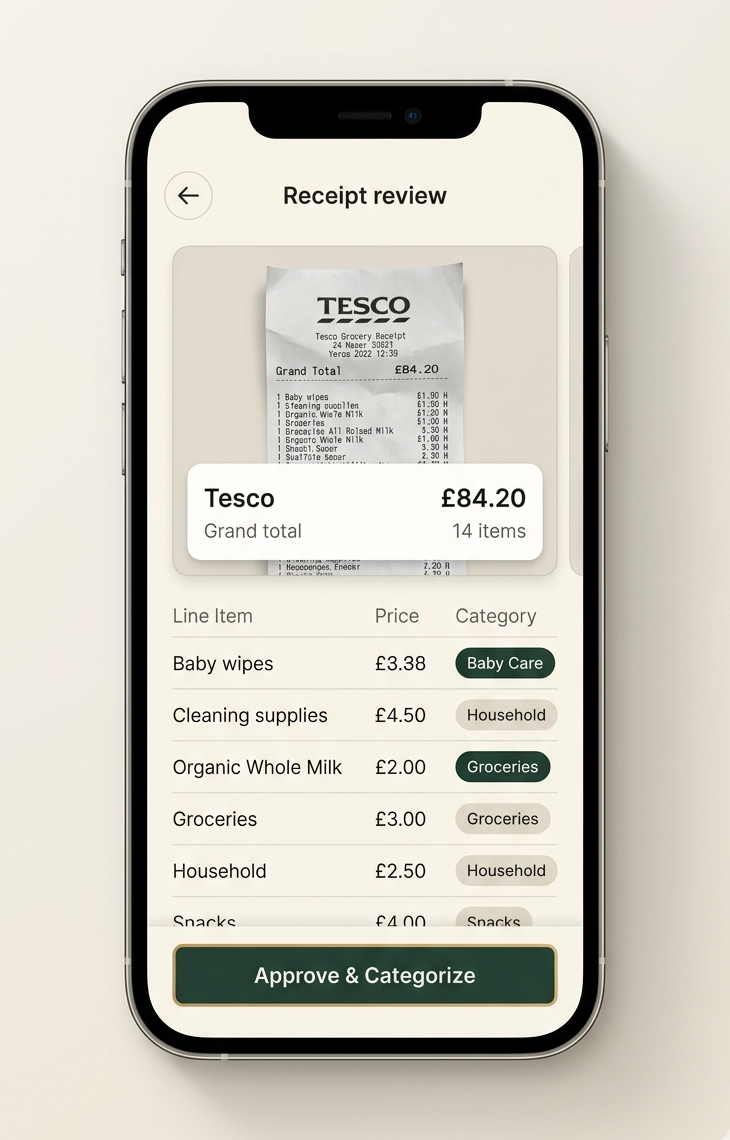
Scan the receipt, keep the merchant and item context, and skip the end-of-month rebuild. FamSpendy starts where real household spending actually happens.

Shared household view

See the same picture without chasing context.

Partners and family members see what was spent, who paid, and what changed. The app is built around a household, not a single-person ledger.

Ask instead of digging

Use plain English to understand the month.

Ask what changed in groceries, which bills are due, or how subscriptions are trending. Answers arrive without digging through filters and exports.

Decision support

Stay on top of the household without more admin.

Budgets, recurring costs, and spending summaries help the household act earlier without turning money management into a second job.

How it works

The flow is simple because family finance is already complicated enough.

The goal is to remove friction at the points where people usually give up: right after a purchase, during bill review, and later when they need an answer quickly.

01

Capture the purchase at the moment it happens

Take a receipt photo or add the expense quickly. FamSpendy is designed around busy households, not perfect bookkeeping behaviour.

02

Let the system organise the mess

Items, merchants, categories, and shared context are pulled into one place so the household can see the same picture.

03

Use the data to make calmer decisions

Search, reports, budgets, and recurring expenses turn spending history into something useful before the next argument starts.

A calmer loop

Capture. Sync. Understand.

Each step reduces manual effort while improving the household's shared view of what is happening.

Receipt review
Trader Joe's. 14 items. Groceries and household split automatically.
Why it matters

You stop rebuilding context later. The purchase is captured once, then the household sees the same clean record.

What happens next

Recurring bills stay visible, spending patterns become easier to read, and follow-up questions do not require a spreadsheet session.

Useful follow-up
“Which subscriptions are still active?”
Built for the purchases, bills, and questions families already have

Stop rebuilding the month from memory.

Capture receipts, share the same picture with your household, and ask better questions before money gets messy.

Get Started Free

No credit card required